
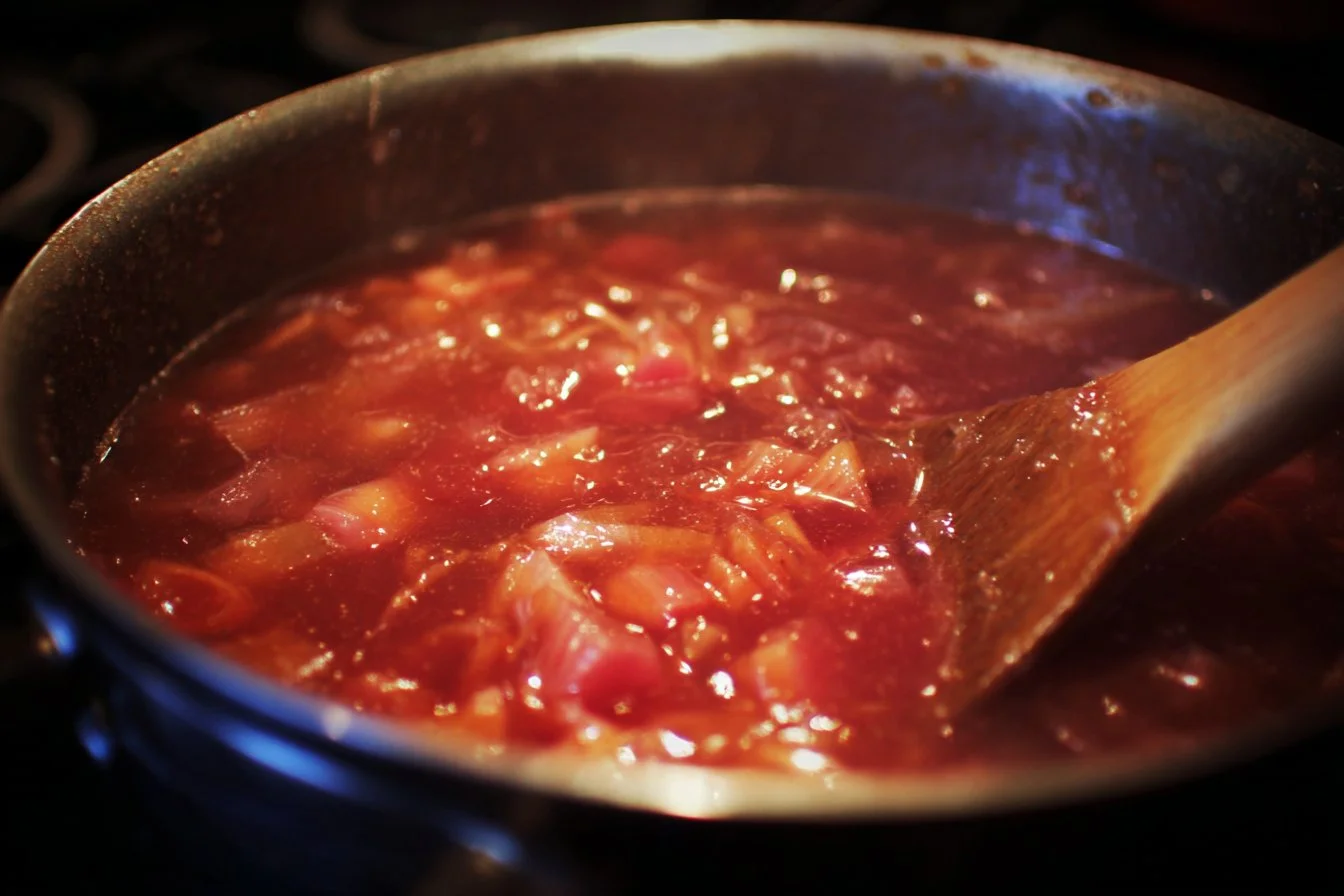
I vividly remember the first time I tasted rhubarb sauce. It was a warm summer afternoon, and my grandmother had just picked rhubarb from her garden. As I watched her create a tangy sauce that perfectly complemented her homemade vanilla ice cream, I was instantly enamored with the bright, tart flavor. Rhubarb sauce is not only a delightful treat but also an incredibly versatile dish that can elevate a variety of meals. If you are curious about how to make this delicious sauce, you’re in the right place.
What is Rhubarb Sauce
Rhubarb sauce is a sweet and tangy condiment made primarily from rhubarb, a vegetable often mistaken for fruit, due to its culinary uses. This sauce typically involves cooking rhubarb with sugar and water until it breaks down into a smooth, thick topping. It can be enjoyed warm or cold, making it a great addition to desserts, breakfasts, or even savory dishes. The beauty of rhubarb sauce lies in its balance of tartness and sweetness, appealing to those who enjoy a punch of flavor in their culinary experience.
Rhubarb is characterized by its vibrant red color and celery-like stalks. It thrives in cooler climates and has a unique taste profile that sets it apart from other fruits. The sauce itself can be modified with various spices or ingredients, allowing for multiple variations. It is particularly popular in North America and Europe, often used to accompany cakes, ice cream, yogurt, and breakfast dishes.
Why You’ll Love This Rhubarb Sauce:
Making rhubarb sauce is rewarding for several reasons:
- Quick and simple to prepare: The entire process can be completed in under 30 minutes.
- Family-friendly dish: With its sweet-tart flavor, it appeals to people of all ages.
- Great for beginners: Even if you are new to cooking, this recipe is straightforward.
- Versatile: It can be used as a topping, ingredient, or side dish, working well with both sweet and savory meals.
- Healthy option: Rhubarb is low in calories and provides fiber and vitamins.
- Seasonal delight: Utilizing fresh rhubarb in season enhances the flavor.
These benefits make rhubarb sauce a beloved choice for many home cooks, whether for a festive gathering or a simple weeknight treat.
Ingredients
To prepare this delightful rhubarb sauce, gather the following ingredients:
- 2 cups rhubarb, chopped
- 1 cup sugar
- 1/2 cup water
- 1 tablespoon lemon juice
These basic ingredients come together to create a sauce that’s bursting with flavor. The sugar balances the tartness of the rhubarb, while the lemon juice adds a refreshing twist.
Step-by-Step Instructions for Rhubarb Sauce
Making rhubarb sauce is an accessible and enjoyable process. Follow these simple instructions to create your delicious sauce:
- In a medium saucepan, combine the chopped rhubarb, sugar, and water. Stir everything together until well mixed.
- Place the saucepan over medium heat and bring the mixture to a boil, stirring occasionally to prevent sticking.
- Once boiling, reduce the heat to low and allow it to simmer for about 10 to 15 minutes. You want the rhubarb to soften significantly, breaking down and melding with the other ingredients.
- When the rhubarb is soft, stir in the fresh lemon juice. This adds brightness and enhances the flavor profile.
- Remove the saucepan from heat and let the sauce cool to room temperature. It will thicken as it cools.
- Serve the sauce warm or chilled, depending on your preference.
This recipe yields a delicious, vibrant sauce that you can enjoy in numerous ways.
Pro Tips and Variations:
To elevate your rhubarb sauce even further, consider these pro tips and variations:
- Experiment with spices: Add cinnamon or ginger for a warm undertone.
- Mix in other fruits: Combine rhubarb with strawberries or apples for a sweeter, fruitier sauce.
- Adjust sweetness: If you prefer a less sweet sauce, reduce the sugar based on your taste.
- Thickening alternatives: For a thicker sauce, add a cornstarch slurry during the simmering phase.
- Serve it warm: Warm rhubarb sauce is delightful over vanilla ice cream or pancakes.
These variations allow you to personalize your rhubarb sauce recipe and discover new flavor profiles that cater to your taste.
How to Serve Rhubarb Sauce
Rhubarb sauce is incredibly versatile and can be served in a variety of ways. Here are some delightful serving suggestions:
- As a topping for desserts: Spoon it over vanilla ice cream, cake, or cheesecake for a delicious indulgence.
- Breakfast boost: Use it as a topping for pancakes, waffles, or yogurt, transforming your morning meal into something special.
- Accompaniment to savory dishes: Pair it with roasted meats like chicken or beef , where the tartness can beautifully complement rich flavors.
- Swirl into oatmeal: Mix it into your morning oatmeal for a refreshing twist.
- Filling for pastries: Use it in pastries or as a filling for tarts and turnovers to add a delightful tang.
Feel free to get creative and incorporate rhubarb sauce into your culinary creations in ways that suit your preferences.
How to Store Rhubarb Sauce
Storing your rhubarb sauce properly will help you enjoy it for a longer time:
- Refrigeration: Place leftover rhubarb sauce in an airtight container and store it in the refrigerator, where it will remain fresh for about 5 to 7 days.
- Freezing: If you want to store it longer, consider freezing the sauce. Pour it into a freezer-safe container, leaving some space for expansion, and it can last up to 6 months.
- Thawing: When ready to use frozen rhubarb sauce, transfer it to the refrigerator to thaw overnight. Then, gently reheat it on the stove or in the microwave, being careful not to overheat, which can change its texture.
This method ensures that you can enjoy your rhubarb sauce at your convenience.
Nutrition Information
Rhubarb sauce is not only delicious but also provides some nutritional benefits. The main components contribute the following:
- Calories: Approximately 80-100 calories per serving
- Carbohydrates: Around 22 grams, primarily from sugar
- Fiber: Provides about 1-2 grams, helping with digestion
- Vitamin C: A good source that supports the immune system
These nutritional values can vary based on how much sugar you use and any additional ingredients you may add. Overall, rhubarb sauce offers a balance of sweetness and tartness with very little fat.
FAQs about Rhubarb Sauce
1. Can I substitute frozen rhubarb for fresh rhubarb in this recipe?
Yes, you can use frozen rhubarb, but make sure to thaw it and drain excess moisture before using it in the sauce.
2. What dishes pair well with rhubarb sauce?
Rhubarb sauce complements a variety of dishes, from desserts like ice cream and pancakes to savory options like grilled meats and cheeses.
3. Is rhubarb safe to eat raw?
While the stalks can be eaten raw, they are quite tart and are typically cooked to mellow their flavor when making sauces or desserts.
4. How can I make rhubarb sauce without added sugar?
You can substitute sugar with natural sweeteners like honey, maple syrup, or agave syrup. Adjust the amount to taste.
Conclusion
Trying your hand at making rhubarb sauce can be a delightful experience. Its sweet yet tangy flavor makes it a versatile addition to many dishes, transforming simple meals into something special. With easy preparation, this sauce is perfect for both culinary novices and seasoned chefs alike. I encourage you to give rhubarb sauce a try and explore the various ways to enjoy it. Share your experience, and let the vibrant flavors of rhubarb charm your palate!