
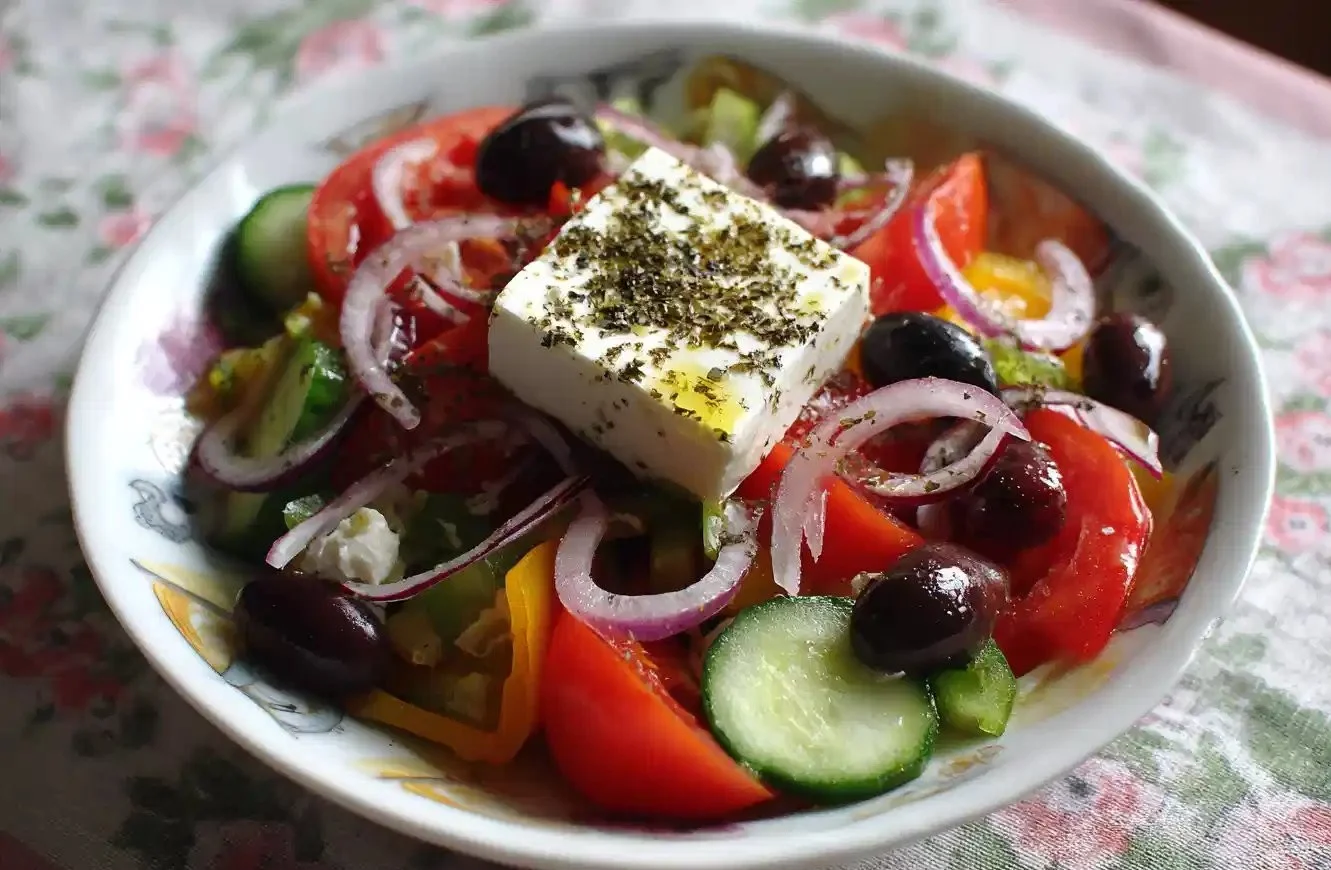
It was a warm summer evening when I first tasted a classic Greek salad at a quaint seaside taverna. The vibrant colors of red tomatoes, crisp cucumbers, and deep green olives danced on the plate, all topped with creamy feta cheese. The first bite was an explosion of flavors – tangy, salty, and refreshing. I savored each mouthful and couldn’t help but think how simple ingredients could create such a delightful dish. Now, whenever I crave a taste of that Mediterranean sunshine, I whip up my own version of Greek salad, reminding me of that beautiful summer night.
What is Greek Salad
Greek salad, also known as Horiatiki, is a fresh, colorful salad that hails from Greece. It typically features a combination of chopped vegetables, such as cucumbers, tomatoes, and red onions, joined by Kalamata olives and feta cheese. Unlike many other salads, a true Greek salad is dressed simply with high-quality olive oil, vinegar, and dried oregano. This dish is not only a staple in Greek cuisine but also embodies the essence of Mediterranean cooking—focused on fresh, wholesome ingredients. Traditionally, Greek salad does not include lettuce; instead, it showcases the natural flavors and textures of every component. Every ingredient plays a vital role, creating a medley that is both nourishing and satisfying.
Why You’ll Love This Greek Salad:
Whether you’re looking for a quick side dish or a nutritious main course, Greek salad is a go-to for many reasons: – **Quick and simple to prepare:** With minimal chopping and mixing required, it comes together in about 15 minutes. – **Family-friendly meal:** The combination of veggies and cheese appeals to a wide variety of taste preferences, making it a hit with both kids and adults. – **Great for beginners:** If you’re learning to cook, this salad requires no special skills or techniques, just fresh ingredients and a bit of love. – **Healthful and satisfying:** Packed with vitamins, minerals, and healthy fats, it provides the nutrition you need while still being light on the stomach. – **Versatile:** You can easily adapt it to suit your dietary preferences by adding ingredients like grilled chicken or chickpeas for added protein or by swapping out the cheese for a vegan alternative.
Ingredients
To create a fresh and delicious Greek salad, gather the following ingredients: – 2 cups cucumbers, chopped – 2 cups tomatoes, chopped – 1 cup red onion, sliced – 1 cup Kalamata olives, pitted – 1 cup feta cheese, crumbled – 1/4 cup olive oil – 2 tablespoons 1 teaspoon dried oregano – Salt and pepper to taste
Step-by-Step Instructions for Greek Salad
Making a Greek salad is effortless. Follow these steps for a delightful dish: 1. **Combine Vegetables and Olives:** In a large bowl, combine the chopped cucumbers, tomatoes, sliced red onion, Kalamata olives, and crumbled feta cheese. Gently toss the ingredients together to distribute them evenly. 2. **Prepare the Dressing:** In a small bowl, whisk together the olive oil , oregano, salt, and pepper until well combined. This simple dressing will enhance the natural flavors of the salad without overpowering them. 3. **Dress the Salad:** Drizzle the dressing over the salad. Toss gently, ensuring that all the ingredients are coated evenly. This step is crucial for achieving a harmonious blend of flavors. 4. **Chill and Serve:** For the best taste, chill the salad in the refrigerator for 30 minutes before serving. This allows the flavors to meld beautifully and enhances the overall experience.
Pro Tips and Variations:
To elevate your Greek salad experience, consider these tips and variations: – **Add Protein:** For a more filling meal, try adding grilled chicken, shrimp, or chickpeas to increase the protein content. – **Experiment with Vegetables:** Feel free to switch up the vegetables based on seasonal availability or personal preference. Bell peppers, radishes, or zucchini can add a delightful crunch. – **Spice it Up:** If you want a little kick, toss in some sliced jalapeños or mix in a dash of red pepper flakes to the dressing. – **Make it Vegan:** Substitute the feta cheese with a vegan cheese alternative or simply omit it for a lighter version that still delights the tastebuds. – **Serve with Bread:** Pair your salad with warm pita or crusty bread for a complete meal that embodies the flavors of the Mediterranean.
How to Serve Greek Salad
Greek salad is incredibly versatile when it comes to serving. Here are some great ideas: – **As a Side Dish:** Serve it alongside grilled meats like chicken or fish to balance the richness with the freshness of the salad. – **As a Main Course:** With added protein, such as chickpeas or grilled chicken, it can hold its own as a satisfying main dish. – **Perfect for Picnics:** Pack it up for picnics or potlucks, where it can stand out as a refreshing, colorful option amid heavier foods. – **Pairing with Drinks:** It goes well with a variety of beverages, particularly iced water, lemonade, or a light, refreshing drink, complementing its flavors perfectly.
How to Store Greek Salad
To ensure your Greek salad stays fresh, follow these storage tips: – **Refrigerate Leftovers:** Store any leftover salad in an airtight container and keep it in the refrigerator. It will last for about 2-3 days. – **Keep Dressing Separate:** If you’ve dressed the salad but have leftovers, it’s best to store the dressing separately to prevent the vegetables from becoming soggy. – **Rejuvenate Before Serving:** If stored cold, the salad can lose some of its original crispness. Before serving, toss it gently and you might consider adding a drizzle of fresh olive oil to revive it. – **Avoid Freezing:** Greek salad is not suitable for freezing as the texture of the vegetables will degrade once thawed. It’s best enjoyed fresh.
Nutrition Information
A serving of Greek salad offers a host of nutritional benefits. While specific values can vary based on exact ingredient measurements and portions, on average, a serving contains approximately: – **Calories:** 250-300 – **Fat:** 20g (predominantly healthy fats from olive oil and olives) – **Carbohydrates:** 15-20g (from fresh veggies) – **Fiber:** 4g (helping to keep you full) – **Protein:** 6-8g (from feta cheese and olives) It is rich in vitamins A, C, and K along with essential minerals such as potassium and magnesium, making it a wholesome addition to any diet.
FAQs about Greek Salad
**Can I add lettuce to my Greek salad?** While traditional Greek salad does not include lettuce, you can certainly add it if you prefer. It will change the texture, but it can still be delicious.
Is Greek salad healthy?
Yes, Greek salad is a nutritious choice. It’s loaded with fresh vegetables and healthy fats, making it a great option for maintaining a balanced diet.
Can I make Greek salad ahead of time?
You can prepare the salad ahead of time, but it’s ideal to dress it just before serving to maintain the freshness and crispness of the vegetables.
What can I substitute for feta cheese?
If you’re looking to substitute feta, try using crumbled goat cheese or a vegan feta alternative, depending on your dietary needs.
Conclusion
This Greek salad is not only a feast for the eyes but also a delightful combination of taste and nutrition. With its vibrant colors and fresh ingredients, it’s the perfect dish to share during lively gatherings or enjoy on a calm dinner night. I encourage you to try making this wonderful Greek salad and share your own experiences and variations with friends and family. Embrace the flavors of the Mediterranean and bring a little sunshine to your dining table!