
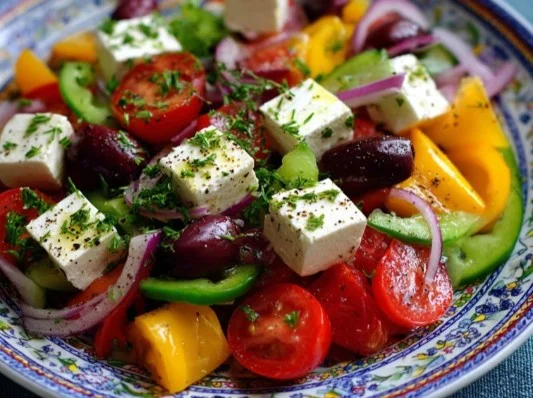
The first time I tasted a true Greek salad was during a family vacation on the beautiful island of Santorini. The vibrant colors of the fresh vegetables and the delightful tang of feta cheese enchanted me. Every bite felt like a burst of sunshine, making it clear why this dish is a staple of Greek cuisine. Greek salad is not just a salad; it’s a celebration of freshness. With its crisp cucumbers and juicy tomatoes, it recalls warm Mediterranean days. This simple yet flavorful salad has become a favorite in my home, and I love how easy it is to prepare.
What is Greek Salad
Greek salad, or Horiatiki, is a traditional dish from Greece, typically made with fresh vegetables, olives, and feta cheese. This charming salad offers a balanced mix of textures and flavors, showcasing the vibrant produce that Greece is famous for. The most common ingredients include ripe tomatoes, crisp cucumbers, bell peppers, red onions, Kalamata olives, and feta cheese, all drizzled with olive oil and flavored with oregano. While it is often seen as a simple side dish, a Greek salad can also be a satisfying meal on its own, especially in the warm months when lighter options are more appealing.
Why You’ll Love This Greek Salad:
This Greek salad is a favorite for many reasons, making it an excellent choice for your next meal or gathering. Here are a few reasons you might fall in love with it:
– Quick and simple to prepare, ideal for busy weeknights.
– Family-friendly meal that is sure to please both kids and adults.
– Great for beginners; requires no cooking skills—just chopping.
– Packed with nutrients from fresh vegetables and healthy fats from olive oil.
– Versatile; can easily be customized to fit various dietary preferences.
Ingredients
To create this wholesome Greek salad, you will need the following ingredients:
– 2 medium cucumbers, diced
– 3 medium tomatoes, chopped
– 1 red onion, thinly sliced
– 1 bell pepper, diced (choose your favorite color)
– 1 cup Kalamata olives, pitted
– 1 cup feta cheese, crumbled
– 1/4 cup olive oil
– 2 tablespoons red wine vinegar
– 1 teaspoon dried oregano
– Salt and pepper to taste
Step-by-Step Instructions for Greek Salad
1. Begin by washing your fresh vegetables thoroughly. Chop the cucumbers, tomatoes, red onion, and bell pepper into bite-sized pieces for easy eating.
2. In a large salad bowl, combine the chopped vegetables with Kalamata olives and crumbled feta cheese. Make sure everything is evenly distributed for a balanced flavor in every forkful.
3. For the dressing, whisk together olive oil, red wine vinegar, dried oregano, salt, and pepper in a small bowl. This mixture will not only add flavor but also enhance the freshness of the vegetables.
4. Pour the dressing over the salad and gently toss everything together to ensure the ingredients are well coated without breaking apart the feta cheese too much.
5. You can serve the salad immediately for a crisp, fresh dish, or let it sit in the refrigerator for up to an hour to allow the flavors to meld together beautifully.
Pro Tips and Variations:
To elevate your Greek salad experience, consider these tips and variations:
– **Add proteins**: Grilled chicken or chickpeas can make it more filling, turning it into a complete meal.
– **Different cheese styles**: Explore using goat cheese or labneh for a creamier texture.
– **Experiment with olives**: Try green olives or a mix for a flavor twist.
– **Seasonal ingredients**: Incorporate seasonal veggies like zucchini or radishes for added crunch and nutrition.
– **Herbs**: Fresh herbs like parsley or basil can add a lovely garden-fresh flavor.
How to Serve Greek Salad
Greek salad is incredibly versatile, making it perfect for various occasions. Here are some serving suggestions:
– Serve it as a refreshing side dish for grilled meats or fish.
– Pair it with pita bread and hummus for a delightful Mediterranean meal.
– Use it as a topping for grain bowls or in a wrap for lunch.
– Drizzle additional olive oil and sprinkle fresh oregano just before serving for an extra touch.
How to Store Greek Salad
Storing leftovers properly helps maintain freshness and flavor. Place any remaining Greek salad in an airtight container in the refrigerator. It should last for about 2-3 days. When you’re ready to enjoy it again, consider refreshing it with a drizzle of olive oil or a squeeze of lemon, as some ingredients may have released moisture during storage. If using grilled chicken or any other protein, store those separately to prevent sogginess.
Nutrition Information
A serving of Greek salad is packed with nutrients. Generally, it offers:
– Rich in vitamins A and C from the fresh vegetables.
– Good source of healthy fats from olive oil and feta cheese, which are beneficial for heart health.
– Includes protein from feta cheese and olives.
– Low in calories, making it a filling yet guilt-free addition to your meals.
FAQs about Greek Salad
– **Q: Can I prepare Greek salad in advance?**
A: Yes, you can prepare it in advance, but keep the dressing separate until just before serving to maintain the freshness of the vegetables.
– **Q: Are there alternatives to feta cheese?**
A: Absolutely! You can try goat cheese or even a dairy-free cheese option to suit your dietary needs.
– **Q: Is Greek salad suitable for meal prep?**
A: It’s great for meal prep as long as you store the dressing separately. Assemble the salad and add the dressing right before you eat it.
– **Q: Can I add other ingredients?**
A: Yes! Feel free to add vegetables like radishes, artichokes, or avocados for extra flavor and texture.
Conclusion
Greek salad is more than just a side dish; it epitomizes the flavors of the Mediterranean. Its freshness and vibrant taste make it a favorite for countless occasions. Whether you enjoy it as a light lunch or as a complement to a hearty dinner, this dish is bound to impress. Try this recipe today and let the flavors transport you to the sunny shores of Greece. Don’t forget to share your experience with family and friends; they will surely want to recreate this delightful salad at home!