
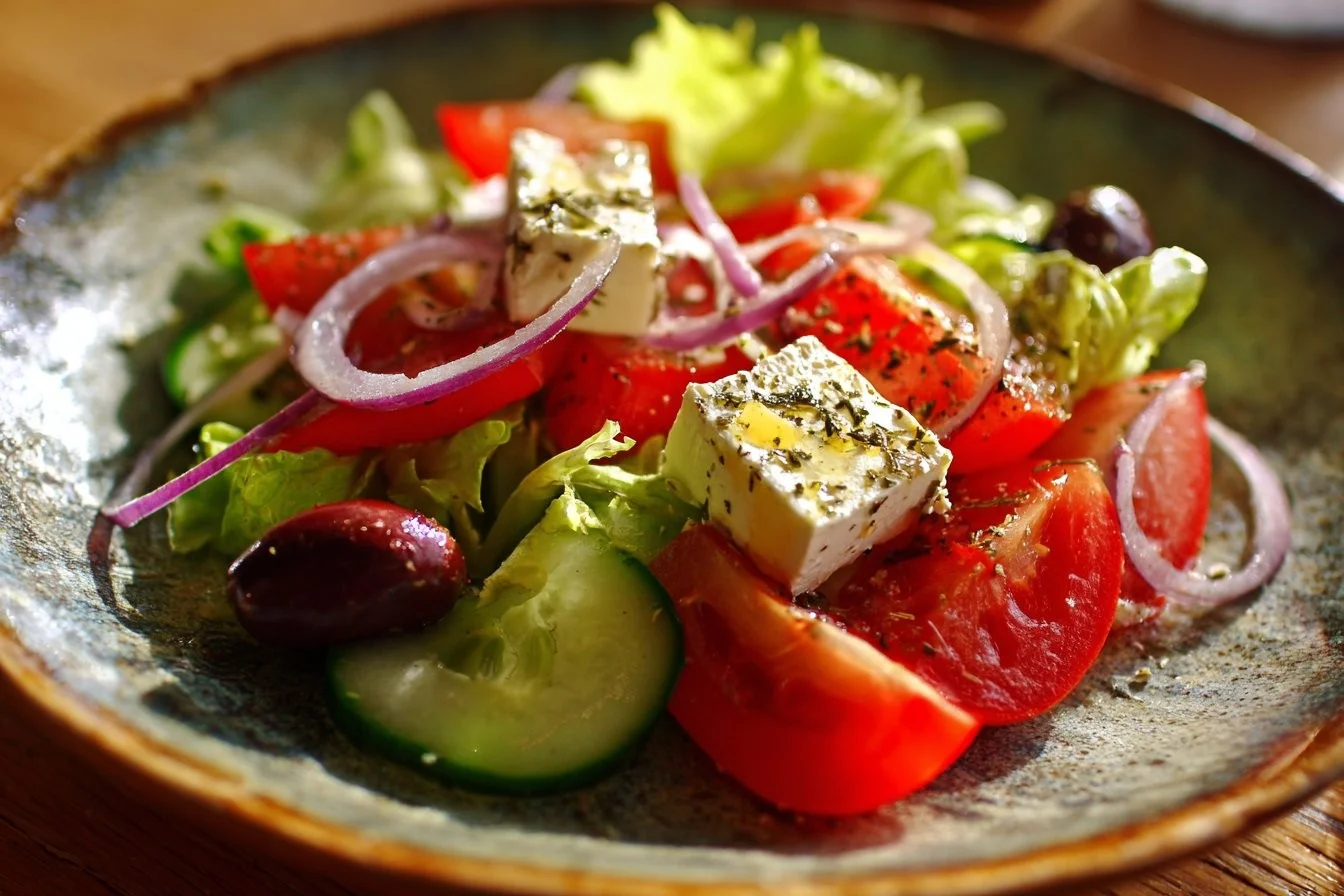
I remember the first time I had a Greek salad at a quaint little tavern in Santorini, the vibrant colors and fresh flavors left a lasting impression. The sweetness of ripe tomatoes mixed with the crunch of cucumbers and the briny taste of Kalamata olives created an explosion of tastes that was hard to forget. Even now, back home, every time I prepare a Greek salad, I’m transported back to those sun-drenched shores, relishing the simplicity and health benefits of this Mediterranean dish. Perfect as a side or a light main course, Greek salad embodies the essence of summer, no matter the season.
What is Greek Salad
Greek salad, known in Greece as Horiatiki, is a traditional dish that brings together fresh vegetables, cheese, and herbs in a simple but delightful manner. The base of this salad typically includes juicy tomatoes, crunchy cucumbers, red onions, Kalamata olives, and creamy feta cheese, all dressed in a generous splash of olive oil and a sprinkle of oregano. Its rustic presentation often features sharp, contrasting colors—the fiery reds of tomatoes, deep greens of cucumbers, and the white brightness of feta cheese—making it as visually appealing as it is delicious. The beauty of Greek salad is not just in its flavors but also in its health benefits. Rich in vitamins, minerals, and healthy fats, it’s a great way to incorporate fresh produce into your daily diet.
Why You’ll Love This Greek Salad
Greek salad is a beloved dish for various reasons:
- Quick and simple to prepare: Perfect for busy days when you need a meal that comes together in no time.
- Family-friendly meal: It’s versatile and can easily cater to personal tastes, making it suitable for all ages.
- Great for beginners: With no cooking involved, this salad is a fantastic starter dish for those new to cooking.
- Nutritious and wholesome: Packed with healthy ingredients, it makes for a guilt-free indulgence.
- Refreshing and hydrating: Ideal for hot summer days, its fresh veggies provide hydration and nourishment.
Overall, its uncomplicated preparation and the ability to customize ingredients based on preference or availability make Greek salad a staple in many households.
Ingredients
To create a traditional Greek salad, you will need the following ingredients:
- 2 Cucumbers, diced
- 3 Medium Tomatoes, chopped
- 1 Red onion, thinly sliced
- 1 Cup Kalamata olives
- 200 grams Feta cheese, crumbled
- 1/4 Cup Olive oil
- 2 Tablespoons Lemon juice
- 1 Teaspoon Oregano
- Salt and pepper to taste
These fresh ingredients work in harmony to deliver the classic flavors that make this salad so attractive.
Step-by-Step Instructions for Greek Salad
Making a Greek salad is both simple and enjoyable. Follow these easy steps for a delightful dish:
- Begin by washing your vegetables thoroughly. Chop the cucumbers into bite-sized pieces and dice the tomatoes into wedges.
- Slice the red onion thinly, ensuring that the pieces are small enough to offer a pleasant crunch without overpowering the other flavors.
- In a large salad bowl, combine the chopped cucumbers, diced tomatoes, sliced red onion, Kalamata olives, and crumbled feta cheese.
- Drizzle the olive oil and lemon juice over the salad, ensuring everything is evenly coated with the dressing.
- Season with oregano, salt, and pepper to taste. Be mindful that feta cheese can be quite salty, so adjust your seasonings accordingly.
- Toss gently to combine all the ingredients, being careful not to break the feta too much. Serve immediately for the best flavor and texture.
This process showcases how quick and rewarding it is to create this iconic dish.
Pro Tips and Variations
To elevate your Greek salad experience, consider these pro tips and variations:
- Add proteins: Include grilled chicken, shrimp, or chickpeas for a heartier meal.
- Experiment with vegetables: Feel free to add bell peppers, radishes, or avocado for additional flavor and nutrients.
- Customize your cheese: While feta is traditional, try using goat cheese or a dairy-free alternative if preferred.
- Make it a meal: Serve the salad atop grains like quinoa or couscous to create a filling, nutritious bowl.
- Prepare in advance: Allow the salad to marinate for 30 minutes for deeper flavor but remember to add olives and feta just before serving to maintain their texture.
These suggestions will help you personalize your salad and incorporate it into a variety of meals.
How to Serve Greek Salad
Greek salad can be served in numerous ways to enhance your dining experience:
- As a side dish: Pair it with grilled meats or fish for a delightful contrast of freshness.
- As a light lunch: Enjoy it on its own with a slice of whole-grain bread or pita alongside.
- With a health-focused meal: Serve it as part of a Mediterranean platter with hummus, baba ganoush, or tzatziki for a flavorful spread.
- At parties: Present in a large bowl, it makes for an eye-catching centerpiece at barbecues or potlucks.
No matter how you choose to serve it, Greek salad is sure to impress.
How to Store Greek Salad
Proper storage is essential to maintain the freshness of your Greek salad. Here are some tips:
- Refrigerate: Store leftovers in an airtight container in the fridge for up to three days.
- Keep dressing separate: If you plan to prepare the salad in advance, consider keeping the dressing separate until just before serving. This helps prevent the vegetables from becoming soggy.
- Freezing: Greek salad does not freeze well due to the high water content in the vegetables. It’s best enjoyed fresh.
When reheating, consider gently tossing it with more fresh ingredients to rejuvenate its vibrant flavors without loss of quality.
Nutrition Information
A serving of Greek salad is not only delicious but also nutritious. Here’s a basic breakdown:
- Calories: Approximately 150 per serving
- Total Fat: 10g (mostly healthy fats from olive oil and feta)
- Carbohydrates: 12g
- Fiber: 3g
- Protein: 5g
This salad is rich in vitamins A and C, antioxidants from the vegetables, and calcium from the cheese, making it a wholesome addition to any meal.
FAQs Greek Salad
1. **Can I make Greek salad ahead of time?**
Yes, you can prepare the ingredients a few hours in advance but for the freshest taste, combine the salad just before serving.
What can I substitute for feta?
You can use goat cheese, ricotta, or even a dairy-free cheese alternative if you’re looking for non-dairy options.Is Greek salad gluten-free?
Absolutely, as it contains no grains, making it suitable for a gluten-free diet.How can I make it more filling?
Add proteins like grilled chicken, shrimp, or legumes, or serve with whole grains for a heartier version.
Conclusion
Greek salad is a delightful fusion of taste, nutrition, and simplicity, making it a worthwhile addition to your meal rotation. Its vibrant ingredients not only satisfy the palate but also promote a healthy lifestyle. By trying this recipe, you’ll enjoy a taste of the Mediterranean and elevate your dining experience. Don’t forget to share your experience and any personal twists you add to the traditional recipe!