
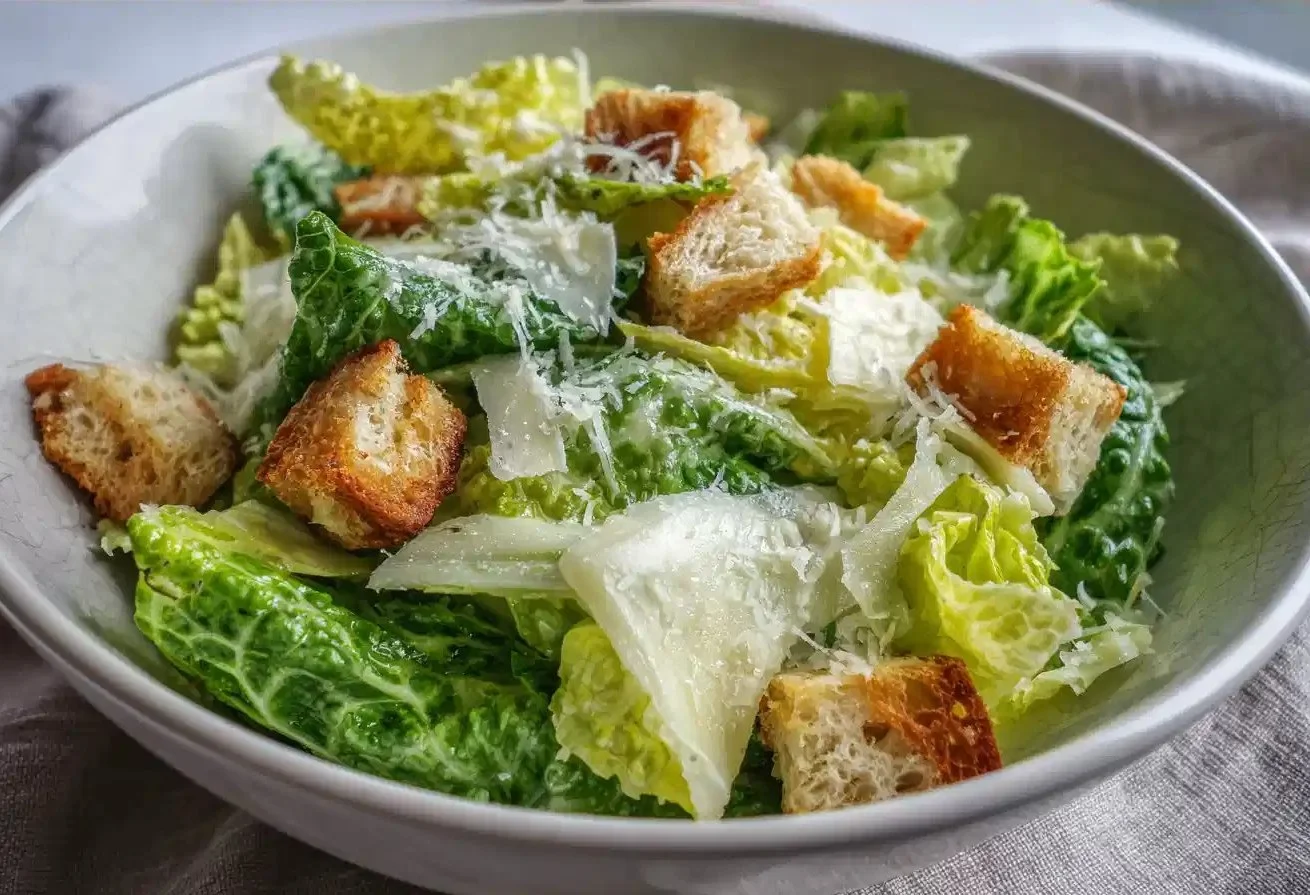
It was a sunny afternoon when I first tasted a Caesar Salad at a quaint little bistro in town. The crunch of fresh romaine lettuce, the savory essence of the dressing, and the sprinkle of Parmesan cheese made the experience unforgettable. Since then, Caesar Salad has become a staple in my kitchen, a simple yet indulgent option for any meal. It’s perfect as a standalone dish or as a side, and its versatility allows it to shine in various culinary contexts. Whether served at a family gathering or as a quick lunch, the combination of flavors and textures in Caesar Salad continues to captivate my palate.
What is Caesar Salad
Caesar Salad is a classic dish that originated in the early 20th century, attributed primarily to Caesar Cardini, an Italian-American restaurateur. Traditionally, it features crisp romaine lettuce, topped with croutons, a creamy dressing, and freshly grated Parmesan cheese. This salad has evolved to include variations that cater to different tastes and dietary preferences, yet the original elements remain beloved for their combined richness and simplicity. The distinctively flavored dressing often includes anchovies, providing a unique umami depth that complements the freshness of the greens.
Why You’ll Love This Caesar Salad:
There are countless reasons why making Caesar Salad is worthwhile. Here are just a few:
- Quick and simple to prepare: With a handful of ingredients and minimal time, you can whip up a fantastic salad.
- Family-friendly meal: It appeals to all ages, making it a great choice for family dinners.
- Great for beginners: Even novice cooks can create an impressive dish with little effort.
- Endless versatility: You can customize it with proteins like grilled chicken or shrimp, or even switch up the greens for a unique spin.
- Nutrient-rich: Packed with fiber from the romaine and healthy fats from the dressing, it can contribute to a balanced meal.
This blend of convenience and flavor makes Caesar Salad a desirable choice for any occasion, encouraging both seasoned chefs and beginners to include it in their culinary repertoire.
Ingredients
To create a classic Caesar Salad, gather the following ingredients:
- Romaine Lettuce: Fresh and crisp romaine is essential for that crunch you love.
- Croutons: Store-bought or homemade, these add texture and a delightful crunch.
- Parmesan Cheese: Freshly grated or shaved for authenticity and flavor enhancement.
- Caesar Dressing: A mixture including anchovies, garlic, lemon juice, egg yolk, Worcestershire sauce, Dijon mustard, and olive oil.
- Black Pepper: Freshly ground to taste, enhancing all the flavors.
These essential ingredients are the foundation of a delicious Caesar Salad, making it both flavorful and satisfying.
Step-by-Step Instructions for Caesar Salad
Making your own Caesar Salad is straightforward. Follow these steps to recreate this classic dish:
- Prepare the lettuce: Start by washing and chopping the romaine lettuce into bite-sized pieces. Place it in a large salad bowl.
- Add croutons and cheese: Sprinkle croutons and shredded Parmesan cheese over the lettuce, adding both texture and flavor.
- Mix the dressing: In a separate bowl, whisk together the anchovies, minced garlic, lemon juice, egg yolk, Worcestershire sauce, Dijon mustard, and olive oil until you achieve a smooth consistency.
- Combine the salad: Pour the dressing over the salad and toss gently to ensure each leaf is evenly coated.
- Season to taste: Finally, add freshly ground black pepper to taste before serving, giving it that extra kick.
Each step is simple yet effective, ensuring that your homemade Caesar Salad is as good as what you get in restaurants.
Pro Tips and Variations:
Enhancing your Caesar Salad can be as easy as remembering a few pro tips:
- Homemade Croutons: For a fresher taste, make your own croutons. Cube bread, toss in olive oil and seasonings, and bake until golden.
- Protein Additions: Top your salad with grilled chicken, shrimp, or even crispy tofu for added protein.
- Alternate Greens: While romaine is traditional, try blending in kale or spinach for a different flavor profile.
- Vegan Option: Substitute the egg yolk in the dressing with a vegan mayonnaise or cashew cream to create a plant-based version.
- Herb Infusion: Add fresh herbs like basil or parsley to the dressing for a unique twist.
These variations make the Caesar Salad a flexible dish that can cater to various dietary preferences and enhance its appeal.
How to Serve Caesar Salad
Caesar Salad can be served in multiple ways to elevate your dining experience:
- Standalone meal: Serve it as a primary dish, especially when topped with grilled chicken or other proteins.
- Side Dish: It pairs wonderfully with grilled meats or seafood, making it a perfect companion for barbecues.
- Party Starter: Present it in smaller portions as an appetizer at gatherings.
- With Bread: Serve alongside crusty bread or garlic bread for a complete meal experience.
These serving options provide flexibility, making it suitable for casual lunches or elegant dinner parties.
How to Store Caesar Salad
Proper storage of leftovers is essential to maintain freshness:
- Refrigeration: Store any leftovers in an airtight container in the refrigerator for up to 2 days. However, it’s best to keep the dressing separate to prevent sogginess.
- Freezing: Freezing is not recommended due to the nature of the greens and dressing; however, you can freeze homemade croutons for later use.
- Reheating: To refresh the salad, avoid microwaving. Instead, let it sit at room temperature for a few minutes before enjoying it again.
These simple storage tips will help keep your Caesar Salad tasting fresh and delicious for as long as possible.
Nutrition Information
Caesar Salad is not only tasty but can also be nutritious. Here’s the nutritional breakdown per serving (approximate):
- Calories: 300-400
- Fat: 27g
- Protein: 10g
- Carbohydrates: 12g
- Fiber: 3g
- Sodium: Varies based on ingredients used.
This breakdown shows that while Caesar Salad can be indulgent, it also packs in nutrient-rich ingredients that can be part of a balanced diet.
FAQs about Caesar Salad
**1. Can Caesar Salad be made in advance?**
Yes, while the lettuce should be added just before serving, you can prepare the dressing and croutons ahead of time.
2. Is Caesar Salad gluten-free?
Traditional Caesar Salad is not gluten-free due to croutons, but you can substitute them with gluten-free alternatives.
3. How can I make the dressing healthier?
You can use a lighter oil, reduce the anchovies, or replace the egg yolk with Greek yogurt for fewer calories.
4. Can I use a store-bought dressing?
Absolutely, there are many delicious store-bought Caesar dressings available if you prefer convenience.
Conclusion
Caesar Salad is a timeless favorite, celebrated for its simplicity and flavor. This recipe offers ease and flexibility for anyone eager to embrace a classic. Whether you’re hosting a gathering or looking for a quick meal, this salad is sure to impress your guests. Try your hand at making this Caesar Salad and share your experiences; you’re bound to create a delightful dish!