
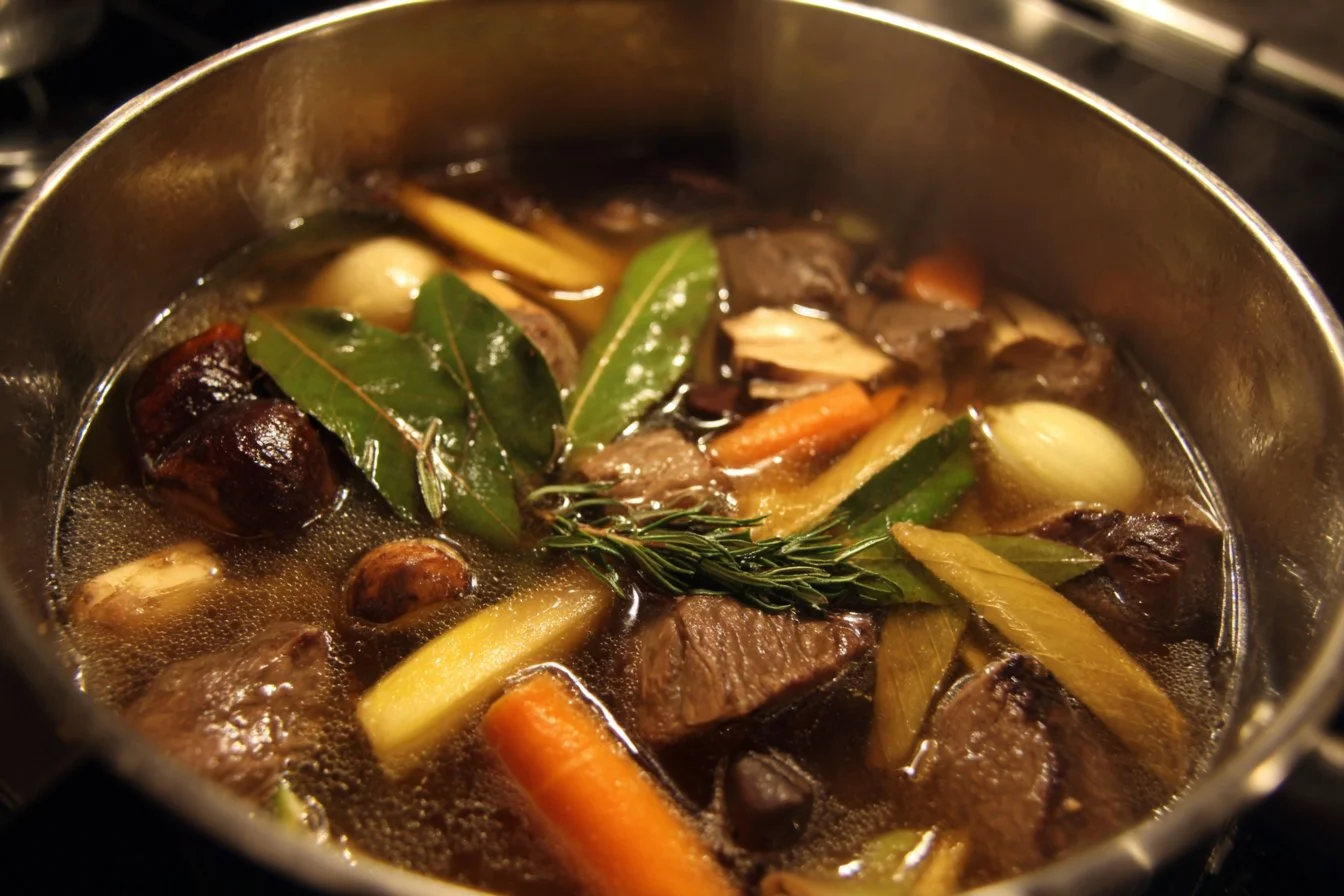
Growing up in a household that embraced home cooking, I can still recall the rich aroma of beef stock simmering on the stove. My mother would spend hours crafting the perfect blend of flavors from simple ingredients, turning what could have been an ordinary meal into something extraordinary. The soothing scent would waft through our home, inviting everyone to gather around the table. Making beef stock became a cherished ritual and a comforting reminder that good things come from love, patience, and a few key ingredients.
What is Beef Stock
Beef stock is a flavorful liquid made by simmering beef bones along with vegetables and herbs. Unlike beef broth, which is typically made with meat, stock extracts flavors and gelatin from the bones, resulting in a more robust and rich final product. It serves as the foundational element in many culinary creations, adding depth and complexity to soups, sauces, and gravies. The process of making beef stock may take a few hours, but the results are well worth the time invested. Those who enjoy cooking at home will find it an incredibly rewarding endeavor.
Why You’ll Love This Beef Stock:
– Quick and simple to prepare once you have your ingredients ready.
– Uses inexpensive cuts of meat and bones, making it budget-friendly.
– Perfect for enhancing flavor in a variety of dishes, from soups to risottos.
– Provides a nourishing base that’s full of nutrients, great for health-conscious cooks.
– A versatile component that can be customized with your favorite herbs and vegetables, ensuring every batch can be unique.
Ingredients
- 2 pounds beef bones (preferably with marrow)
- 1 onion, quartered
- 2 carrots, chopped
- 2 celery stalks, chopped
- 4 cloves garlic, smashed
- 1 bay leaf
- 5-6 sprigs fresh thyme
- 10-12 cups cold water
- Salt and pepper to taste
Step-by-Step Instructions for Beef Stock
- Preheat the oven to 400°F (200°C). Begin by spreading the beef bones on a baking sheet in a single layer. Roast them in the oven for about 30 to 45 minutes until they are browned. This step enhances the flavor of the stock significantly.
- In a large stock pot, combine the roasted bones with the quartered onion, chopped carrots, chopped celery, smashed garlic, bay leaf, and fresh thyme. This combination of vegetables adds complexity to the flavor of the stock.
- Pour in enough cold water to cover the mixture by about an inch. This ensures that all the ingredients are submerged and can contribute to the flavor.
- Bring the pot to a boil over high heat. Once boiling, reduce the heat to a gentle simmer. During this process, skim off any foam that rises to the surface, which helps to ensure a clear stock.
- Allow the stock to simmer slowly for at least 4 hours, although 6 to 12 hours will yield a richer flavor. The longer the stock simmers, the more nutrients and flavors are extracted.
- After simmering, strain the stock through a fine-mesh sieve into another pot or large bowl. Discard the solids, as they will no longer have flavor.
- Season the stock with salt and pepper to taste. It can be used immediately, or cooled and stored for later use in the refrigerator or freezer.
Pro Tips and Variations:
- To enhance the flavor of your beef stock, consider adding additional vegetables such as leeks or mushrooms for extra depth.
- If you prefer a smokier flavor, you can add a few pieces of smoked beef bones.
- For a more aromatic stock, incorporate herbs like parsley stems or bay leaves during the simmering process.
- If you’re mindful of fat, you can refrigerate the finished stock overnight, and the fat will solidify on the surface, making it easy to remove.
- Feel free to adjust the flavor profile by experimenting with different spices. A dash of soy sauce can add an umami richness to the stock.
How to Serve Beef Stock
Beef stock is incredibly versatile and can be used in various ways. Here are some serving suggestions:
- Use it as a base for hearty soups, such as broccoli cheddar or vegetable soup.
- Incorporate it into sauces for an added depth of flavor in dishes like beef bourguignon or coq au vin.
- It can serve as a cooking liquid for grains like rice or quinoa, imparting flavor as they cook.
- For comfort food, use it in stews and braises, where the rich flavor enhances the dish.
How to Store Beef Stock
Leftover beef stock can be stored easily. Allow it to cool completely, then transfer it to airtight containers. It can be refrigerated for up to one week. For longer storage, you can freeze the stock in smaller portions using ice cube trays, then transfer the frozen cubes to a resealable plastic bag. This allows you to use only what you need for future recipes. When reheating, do so slowly in a saucepan over low heat to preserve the flavors. Avoid boiling the stock again, as this may alter its taste and texture.
Nutrition Information
While the exact nutritional profile may vary based on the ingredients used and the cooking time, homemade beef stock is generally low in calories and rich in protein. It has beneficial nutrients extracted from the bones such as collagen, amino acids, and minerals, making it a nourishing addition to your meals.
FAQs about Beef Stock
Can I use store-bought bones to make beef stock?
Yes, using store-bought bones is a convenient option, especially if fresh bones are not available. Look for bones labeled for stock or broth making at your grocery store.
Can I make beef stock in a slow cooker?
Absolutely! You can transfer all the ingredients into a slow cooker and cook it on low for 12 to 24 hours for a deeply flavored stock.
How can I tell if beef stock has gone bad?
If your stock has an off smell, unusual flavors, or discoloration, it’s best to discard it. Always trust your senses.
What is the difference between stock and broth?
Stock is made primarily from bones and is richer and more flavorful, while broth is made with meat and is lighter in flavor.
Conclusion
Making beef stock is not only a rewarding kitchen endeavor but also an essential skill for any home cook looking to elevate their meals. It’s a resourceful way to use ingredients typically considered scraps and turn them into something flavorful and nutritious. Try making this beef stock recipe, and you will discover the comfort and depth it brings to your dishes. Share your thoughts and experiences with this timeless recipe, and enjoy the warm flavors it fills your home with!