
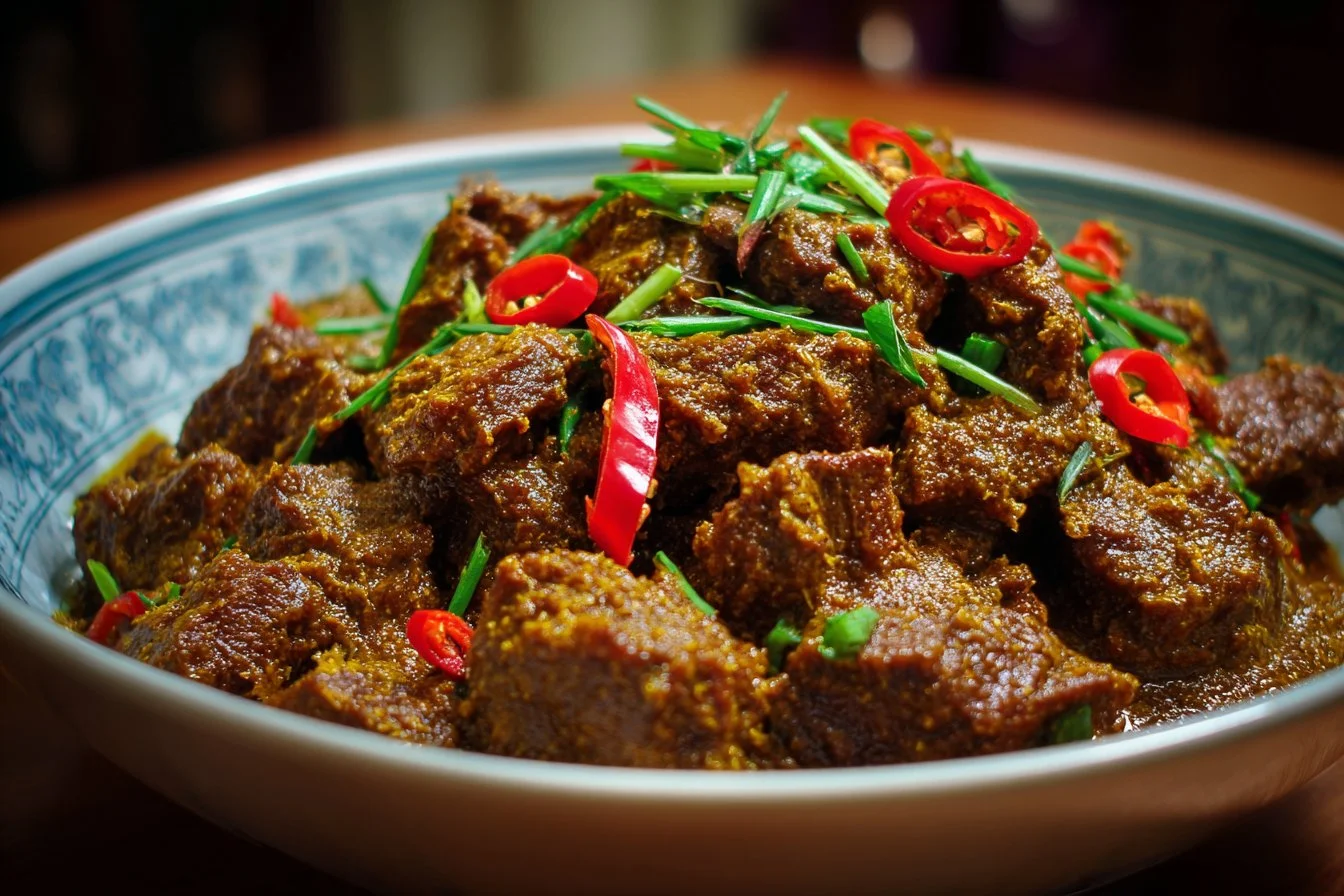
There’s something magical about the aroma that fills the kitchen when Beef Rendang is simmering on the stove. I recall the first time I tasted it at a friend’s family gathering, where the rich, spicy flavor captured my senses. Every moment spent savoring that dish left a lasting impression on me, and I knew I had to learn how to make it myself. This slow-cooked beef dish, brimming with spices and creamy coconut milk, has since become a staple in my home. The journey from the first bite to my kitchen has made Beef Rendang not just a meal, but a connection to culture and warmth.
What is Beef Rendang
Beef Rendang is an iconic Indonesian dish that hails from the Minangkabau ethnic group. It’s traditionally prepared for special occasions, representing a blend of rich flavors and a labor-intensive cooking process. The dish consists of beef simmered slowly with an array of spices and coconut milk, often resulting in tender meat that absorbs all the deep flavors. Though it originated in Indonesia, Beef Rendang has garnered fans globally, with many variations emerging in different countries. The slow-cooking method allows the meat to be infused with the spices, creating a luscious sauce that pairs perfectly with rice or other side dishes.
Why You’ll Love This Beef Rendang:
There are numerous reasons to fall in love with Beef Rendang, whether you’re a seasoned cook or just getting your bearings in the kitchen. Here are some key benefits of this delightful dish:
– **Rich, complex flavors:** The combination of spices creates a taste experience that’s truly unforgettable.
– **One-pot meal:** Everything cooks together, making cleanup a breeze.
– **Meal prep friendly:** The dish can be made in advance and often tastes even better the next day.
– **Customizable:** Adjust spice levels or add vegetables to suit your taste preferences.
– **Perfect for gatherings:** Beef Rendang impresses guests and can be a centerpiece for any meal.
Ingredients
To make a delicious Beef Rendang, gather these ingredients:
– 2 pounds beef chuck, cut into cubes
– 1 can coconut milk
– 2 tablespoons vegetable oil
– 1 onion, finely chopped
– 4 cloves garlic, minced
– 1 tablespoon ginger, grated
– 2 tablespoons soy sauce
– 1 tablespoon tamarind paste
– 1 tablespoon brown sugar
– 2-3 tablespoons rendang spice paste (or substitute with ground coriander, cumin, turmeric, and chili)
– Salt to taste
– Fresh lime leaves (optional)
– Chopped cilantro for garnish
Step-by-Step Instructions for Beef Rendang
1. Heat the oil in a large pot over medium heat. Add the onions and sauté until they become soft and translucent.
2. Stir in the minced garlic and grated ginger, cooking for another minute until fragrant.
3. Add the beef cubes, browning them on all sides to lock in the juices.
4. Pour in the coconut milk, then mix in the soy sauce, tamarind paste, and brown sugar, stirring well to combine.
5. Incorporate the rendang spice paste and add salt to taste. Ensure everything is well mixed.
6. Bring the mixture to a gentle simmer, reduce the heat to low, and cover the pot. Let it cook for approximately 2-3 hours, stirring occasionally, until the beef is fork-tender.
7. If using, add the lime leaves during the final 30 minutes of cooking for additional fragrance.
8. Serve hot, garnished with chopped cilantro for a fresh touch.
Pro Tips and Variations:
To elevate your Beef Rendang experience, consider these pro tips and variations:
– **Use different cuts of beef:** While chuck is great, brisket or round can also be delicious, but may require adjustments in cooking time.
– **Adjust the spice level:** Increase or decrease the amount of spice paste according to your heat preference.
– **Add veggies:** Consider incorporating vegetables like carrots or potatoes for a heartier dish.
– **Make it ahead of time:** Prepare the dish a day in advance; the flavors meld beautifully overnight.
– **Freezing:** Beef Rendang can be stored in the freezer for future meals; just ensure it’s in an airtight container.
How to Serve Beef Rendang
Serving Beef Rendang is as important as the cooking process itself. Traditionally, it pairs beautifully with steamed jasmine rice or coconut rice, allowing the rich sauce to be soaked up. You can also serve it with fresh, crisp salads for a contrast in flavors. For a festive touch, consider adding pickled vegetables as a side. Alternately, it can be served on its own as a luxurious dish, allowing the flavors to take center stage.
How to Store Beef Rendang
Leftovers of Beef Rendang can be stored in the fridge in an airtight container for up to three days. To extend its lifespan, consider freezing it, where it can remain good for about three months. When reheating, it’s best to do so on the stovetop over low heat, stirring occasionally to ensure even warming and to maintain the sauce’s rich texture. Adding a splash of coconut milk can help rejuvenate the dish if it thickens during storage.
Nutrition Information (Optional but Recommended)
While specific values will depend on the exact ingredients used and portion sizes, a typical serving of Beef Rendang is high in protein, thanks to the beef, and provides a good amount of healthy fats from coconut milk. It’s also rich in various vitamins and minerals found in the spices and garlic, making it a flavorful yet satisfying meal.
FAQs Beef Rendang
1. **Can I use chicken instead of beef?**
Absolutely, chicken rendang is a popular variant and cooks faster than beef.
Is this dish suitable for meal prepping?
Yes, Beef Rendang stores well and often tastes better after a day in the fridge.How spicy is traditional Beef Rendang?
The spice level can vary, but it typically has a medium heat. You can adjust it according to your taste.Can I make it vegetarian?
Yes! Substitute beef with hearty vegetables like mushrooms or jackfruit and adjust the cooking time accordingly.
Conclusion
Beef Rendang is more than just a recipe; it’s a culinary adventure that transports your taste buds to Indonesia. The blend of spices, rich flavors, and aromatic coconut milk creates a dish that’s both nourishing and indulgent. I encourage you to try this Beef Rendang recipe in your kitchen and experience the joy it brings to your dining table. Your friends and family will surely appreciate the effort, and you’ll undoubtedly savor the rewards. Share your experience with others and embrace the delightful journey of making this exquisite dish!