
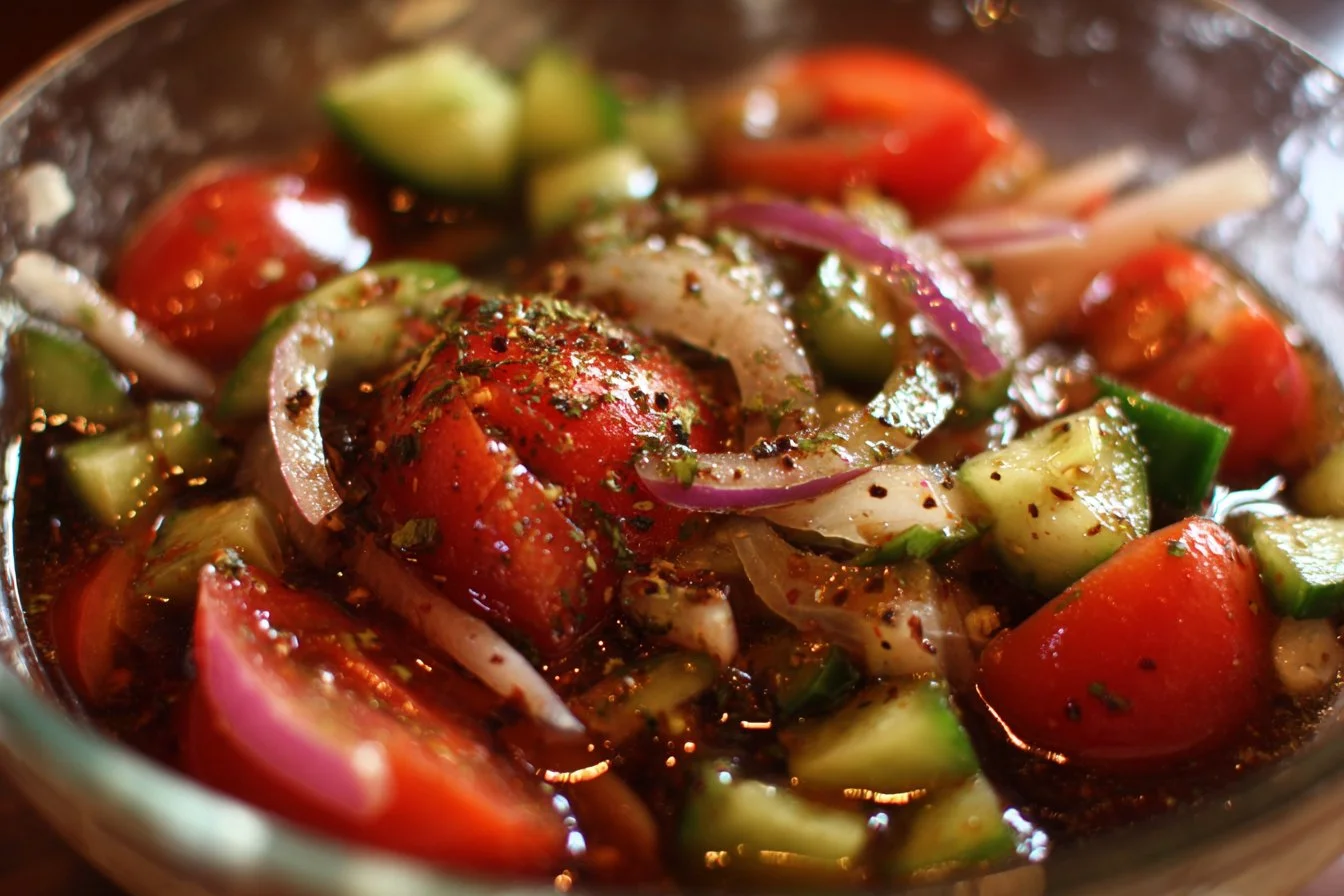
The first time I tasted Greek salad dressing, I was at a beachside taverna on a sun-drenched afternoon in Greece. The sun was setting, casting a golden glow over everything, and the cool sea breeze made the day perfect. I remember savoring every bite of the fresh salad drizzled with a fragrant dressing of olive oil, tangy vinegar, and aromatic herbs. The dressing elevated the simple ingredients of cucumber, tomatoes, olives, and feta cheese to something extraordinary. Ever since then, I have been on a quest to recreate that authentic flavor at home, and mastering Greek salad dressing truly became my culinary passion.
What is Greek Salad Dressing
Greek salad dressing is a vibrant and flavorful accompaniment primarily used to enhance Greek salads, but its charm doesn’t stop there. This dressing blends the richness of olive oil, the acidity of vinegar, and the aromatic qualities of herbs and spices, creating a dynamic flavor profile. Traditionally, it involves olive oil, red wine vinegar, fresh or dried oregano, garlic, and a pinch of salt and pepper. Each ingredient serves a purpose, combining to make a dressing that not only elevates salads but can also be used for marinating meats or drizzling over roasted vegetables. The seductive aroma and taste evoke images of sun-drenched Mediterranean coasts, making it a favorite in kitchens worldwide. The dressing is not only versatile but also quick to prepare, which makes it an essential component for any home cook to master.
Why You’ll Love This Greek Salad Dressing
Creating Greek salad dressing at home is rewarding and leaves you in control of flavor and freshness. Here are just a few reasons why you might find this recipe becomes a staple in your kitchen:
- Quick and simple to prepare: With just a few minutes and a handful of ingredients, you can whip up this dressing effortlessly.
- Family-friendly meal: The delightful flavors are appealing to both kids and adults, accommodating various taste preferences.
- Great for beginners: This is an easy recipe that does not require advanced culinary skills, ideal for those just starting their cooking journey.
- Versatile usage: Use it for salads, marinades, and dips, or add it to sandwiches for an extra burst of flavor.
- Fresh and healthy option: Made with wholesome ingredients, this dressing promotes a healthy lifestyle without compromising on taste.
These advantages make Greek salad dressing a perfect addition to everyday meals and special occasions.
Ingredients
To prepare a classic Greek salad dressing, gather the following ingredients:
- 1/2 cup olive oil
- 1/4 cup red wine vinegar
- 1 teaspoon dried oregano
- 1 clove garlic, minced
- Salt and pepper to taste
With these fresh ingredients, you will easily create a dressing that brightens up any dish.
Step-by-Step Instructions for Greek Salad Dressing
Making Greek salad dressing is incredibly straightforward. Begin by gathering all of your ingredients and a medium-sized mixing bowl. First, pour the olive oil into the bowl. The quality of olive oil plays a significant role in the overall flavor, so opt for a good quality extra virgin olive oil if possible. Next, add the red wine vinegar, ensuring you measure accurately for the right balance of acidity and richness.
Now it’s time to introduce the oregano and minced garlic into the mix. The oregano gives that distinctive herbaceous flavor, while garlic adds a nice punch. Use a whisk to combine these ingredients thoroughly. As you whisk, drizzle the mixture into the bowl until it emulsifies into a dressing. Taste it and season with salt and pepper to your liking. Depending on personal preference, you can adjust the proportions slightly; feel free to add more garlic for a sharper taste or additional vinegar for extra zing. Once you’re satisfied with the flavor, it’s ready to serve over a fresh Greek salad or alongside any of your favorite dishes.
Pro Tips and Variations:
To elevate your Greek salad dressing even further, consider these pro tips and variations:
- Fresh Herbs: Instead of dried oregano, try using finely chopped fresh herbs such as parsley or dill for an even fresher taste.
- Lemon Juice: Substitute part of the vinegar with freshly squeezed lemon juice for a brighter, citrusy flavor.
- Add Honey: A teaspoon of honey can balance out the acidity and add a hint of sweetness, perfect for those who prefer a milder dressing.
- Spicy Kick: For those who enjoy heat, a pinch of red pepper flakes can add an exciting kick to the dressing.
- Creamy Version: Blend the dressing with a dollop of Greek yogurt for a creamier texture that works beautifully on salads or as a dip.
- Storage: This dressing can be made in advance and stored in the refrigerator for up to a week. Shake well before serving to bring it back together.
These variations allow you to customize your dressing based on personal taste and meal needs, ensuring it remains a delightful addition to your table.
How to Serve Greek Salad Dressing
Greek salad dressing is incredibly versatile and pairs wonderfully with a variety of dishes. It is perfect drizzled over a classic Greek salad made with tomatoes, cucumbers, red onions, olives, and feta cheese. However, don’t stop there. This dressing can also be applied to mixed greens, pasta salads, or roasted vegetables for added flavor.
For a refreshing side dish, toss it with quinoa or farro, along with diced vegetables and nuts to create a hearty, nutritious meal. Additionally, consider using it as a marinade for chicken, turkey, or seafood before grilling or baking; the rich flavors penetrate the meat beautifully. As a dip, it can accompany fresh pita bread, vegetables, or even crackers, offering a zesty option for appetizers or snack time.
How to Store Greek Salad Dressing
Proper storage is essential to maintain the freshness of your homemade Greek salad dressing. To store it, simply pour the dressing into an airtight container or a clean glass jar with a lid. The dressing can be refrigerated for up to one week. During the storage time, the ingredients may separate, so it’s important to shake the container well before each use to recombine everything.
If you find yourself with leftover dressing, you can also freeze it. Pour it into ice cube trays and freeze until solid. Once frozen, transfer the cubes to a vacuum-sealed bag or a freezer-safe container. This allows you to thaw small portions as needed, ensuring that you have fresh dressing on hand without wasting any ingredients.
Nutrition Information
While exact nutrition values may vary based on specific ingredient brands and measurements, here’s a general idea of the nutritional benefits of Greek salad dressing per serving:
- Calories: Approximately 130
- Total Fat: 14g
- Saturated Fat: 2g
- Sodium: 80mg
- Total Carbohydrate: 1g
- Dietary Fiber: 0g
- Sugars: 0g
- Protein: 0g
The primary source of calories comes from healthy fats in the olive oil, which contribute to heart health when consumed in moderation. Olive oil is rich in monounsaturated fats and antioxidants, promoting overall well-being.
FAQs about Greek Salad Dressing
1. Can I use other types of vinegar?
Absolutely! While red wine vinegar is traditional, you can substitute it with white wine vinegar, apple cider vinegar, or even balsamic vinegar for a different flavor profile.
2. How long does Greek salad dressing last?
When stored in the refrigerator, this dressing can last up to a week. Just remember to shake it well before each use as the ingredients may separate.
3. Is there a vegan version of Greek salad dressing?
Yes, this dressing is naturally vegan! Just be sure that your garlic and other ingredients are plant-based.
4. Can I make this dressing without garlic?
Certainly! If you’re not a fan of garlic, simply omit it, and the dressing will still be delicious. You might consider adding a little more oregano or a pinch of onion powder for flavor.
Conclusion
Creating your own Greek salad dressing opens up a world of flavor and enhances your dishes with ease. This simple yet vibrant dressing is not only quick to prepare, but it also elevates any salad or meal into something special. With the ability to customize the flavor and enjoy the freshness of homemade ingredients, I encourage you to try this Greek salad dressing recipe and share your experiences. You’ll find it becoming a staple in your kitchen, ready to enhance every meal.