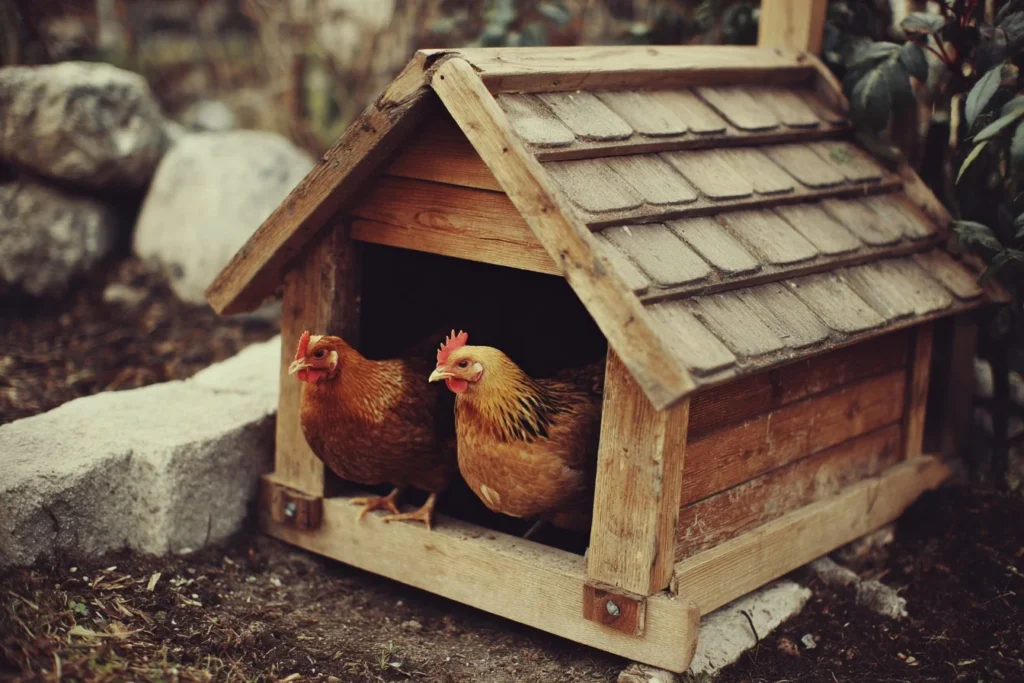
Ingredients
Method
Construction Process
- Plan Your Design: Sketch your coop layout taking into account the number of chickens and space within your yard, including features like nesting boxes and roosting bars.
- Gather Tools and Materials: Collect all needed materials and ensure you have tools such as a saw, hammer, drill, and measuring tape.
- Build the Frame: Construct the base frame with pressure-treated wood, ensuring it's level and secure.
- Add Walls and Roof: Attach plywood sheets to form the walls and use roofing materials for secure covering.
- Install Ventilation: Cut openings for windows and cover them with wire mesh for airflow, ensuring chicken safety.
- Create Nesting Boxes and Roosting Bars: Install nesting boxes and add sturdy roosting bars for chicken comfort.
- Paint and Seal: Paint the exterior with non-toxic sealant to protect wood from the elements.
- Add Bedding and Accessories: Place bedding in nesting boxes and inside the coop for a comfortable environment.
- Introduce Your Chickens: Once the coop is fully set up, introduce your chickens to their new home.
Notes
Consider elevating the coop above ground for protection and adding an outdoor run if space allows. Regular maintenance is necessary for longevity.